 i
i 





|
बी एड - एम एड >> बी.एड. सेमेस्टर-1 प्रश्नपत्र-I - फिलासफिकल पर्सपेक्टिव आफ एजुकेशन बी.एड. सेमेस्टर-1 प्रश्नपत्र-I - फिलासफिकल पर्सपेक्टिव आफ एजुकेशनसरल प्रश्नोत्तर समूह
|
|
|||||||

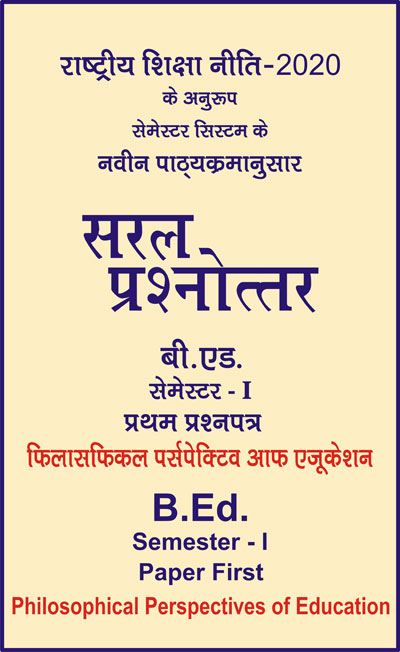

बी.एड. सेमेस्टर-1 प्रश्नपत्र-I - फिलासफिकल पर्सपेक्टिव आफ एजुकेशन (अंग्रेजी भाषा में)
Question- Explain Plato’s idea about women’s education and education of slaves.
Answer -
A: Plato was a great Greek philosopher and educationist, he favoured democracy. His educational philosophy cherished high philosophical thought yet in applicability his philosophy is very practical. According to Rousseau, “If you wish to know what is meant by public education, read Plato’s Republic; It is the finest treaties on education ever written.” Plato gave more importance to education than any other Greek thinker and he considered justice as the supreme virtue. At this ideological backdrop, we analyze Plato’s idea about women’s education and education of slaves.
Women’s Education
Perhaps Plato was the first effeminate, who gave equal rights to women. In his great work Republic, Plato emphasized the importance of women’s education. He favours women’s community life. Philosophically, Plato constructed an ideal state where the social unit of life should not be family but commune. The idea of commune encouraged Plato to stand for the equality of women. The education of women was one of such equalitarian issues.
Education of Slaves
The slaves were the reality of Greek society in Plato’s era. Their condition was highly grave. Under the way of his democratic ideology, Plato favoured the education of slaves. It was not only for the welfare of slaves but for the development of society. Plato divides people into different categories to shoulder certain responsibilities in his ideal state. Slaves were assigned labour work, but to refine them, education was provided so that they could handle their jobs diligently.
|
|||||
अन्य पुस्तकें
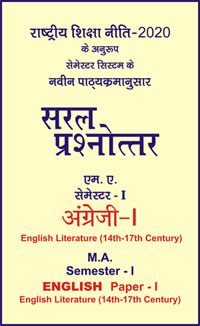
एम ए सेमेस्टर-1 - अंग्रेजी - प्रथम प्रश्नपत्र - अंग्रेजी साहित्य 14वीं-17वीं शताब्दी
सरल प्रश्नोत्तर समूह
मूल्य: Rs. 400